
Regular price
£135.00 GBP
Sale price
£135.00 GBP
Regular price
£158.00
Save 15%



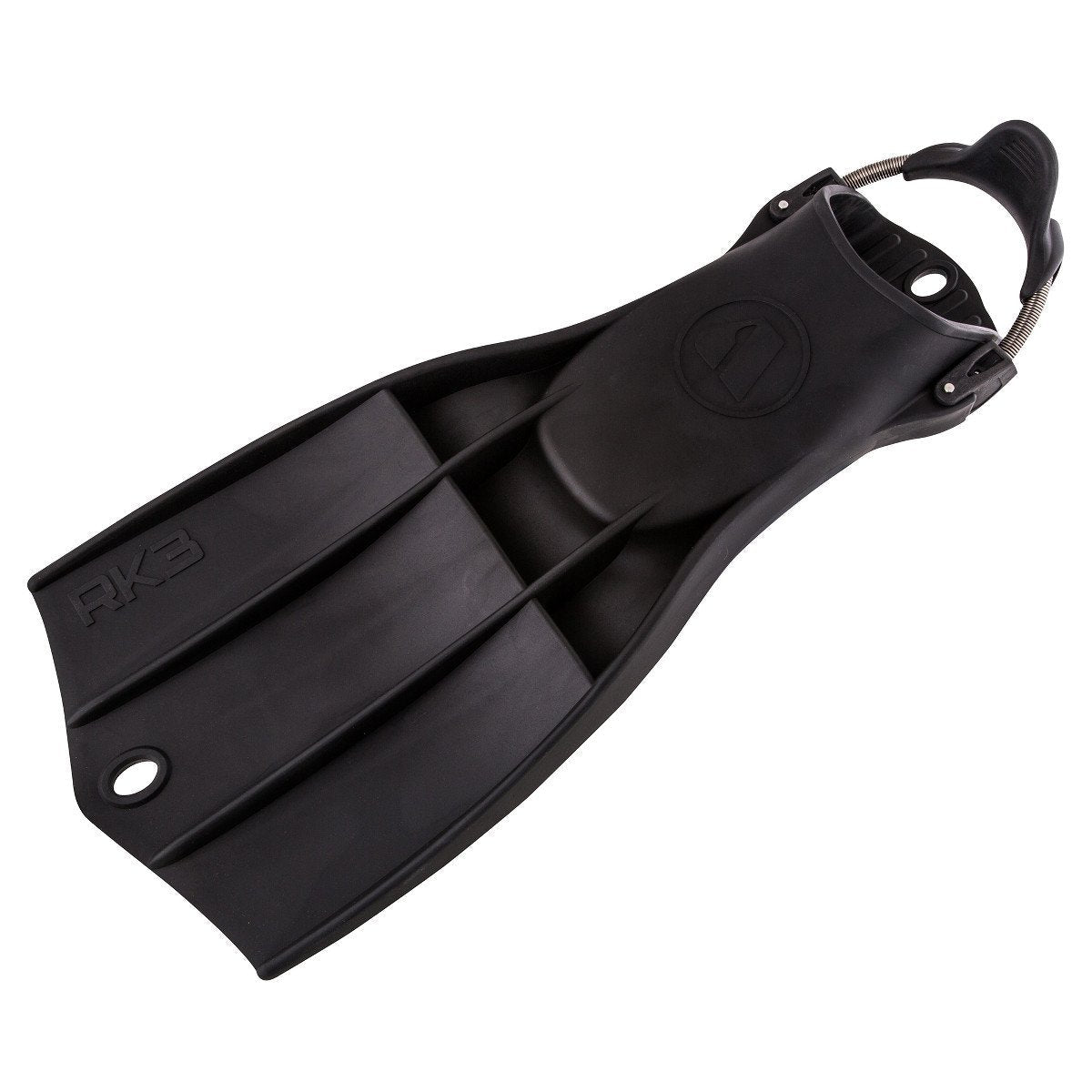
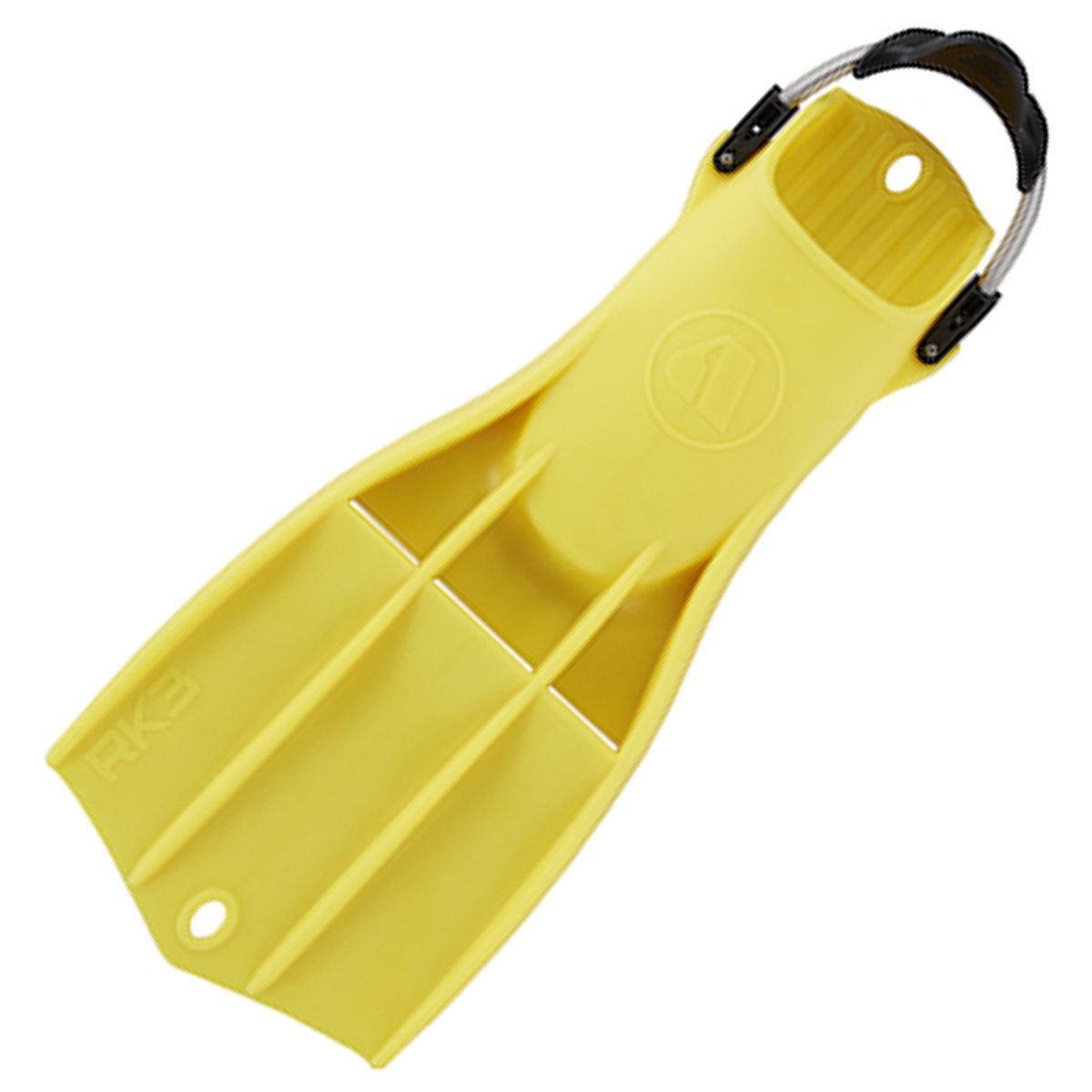
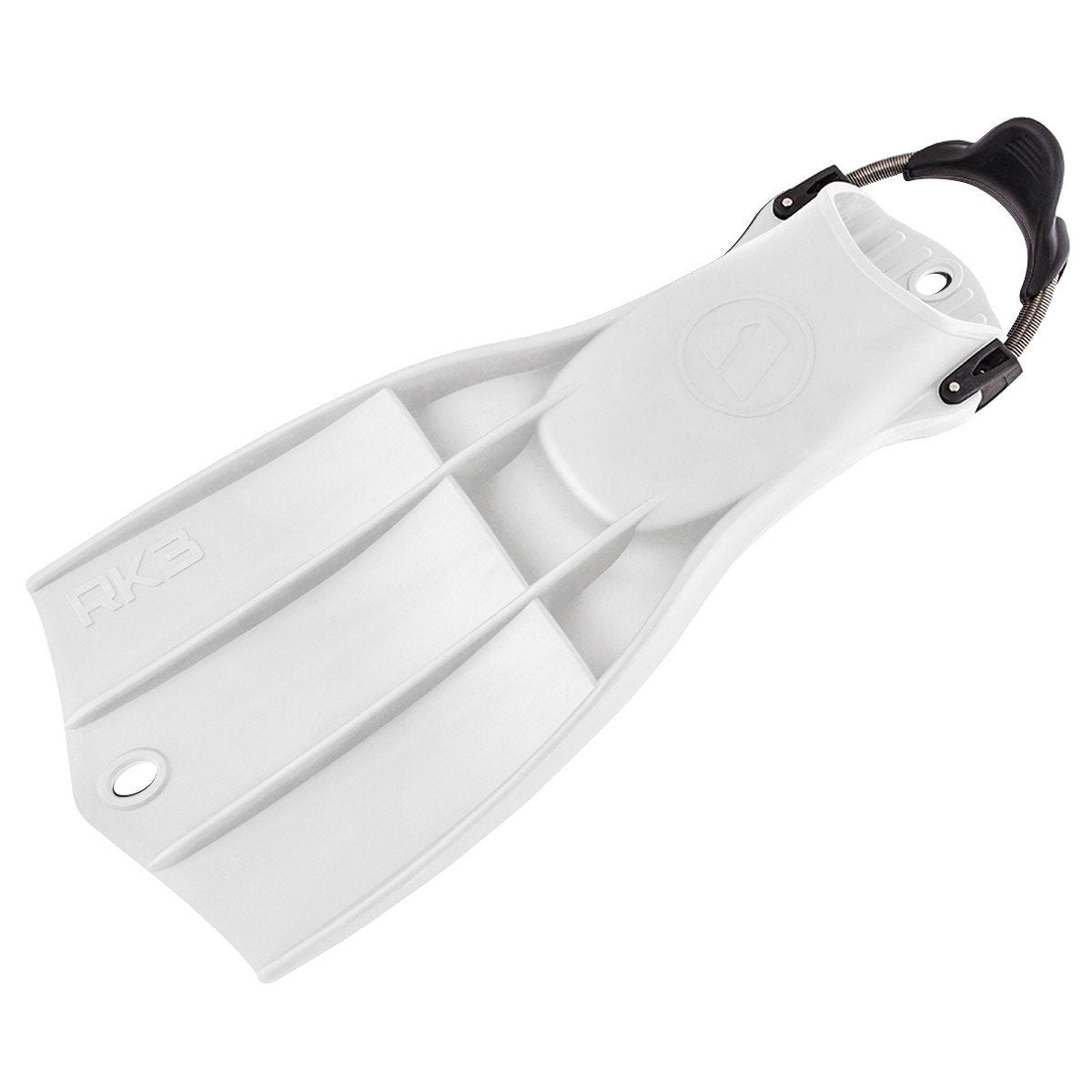
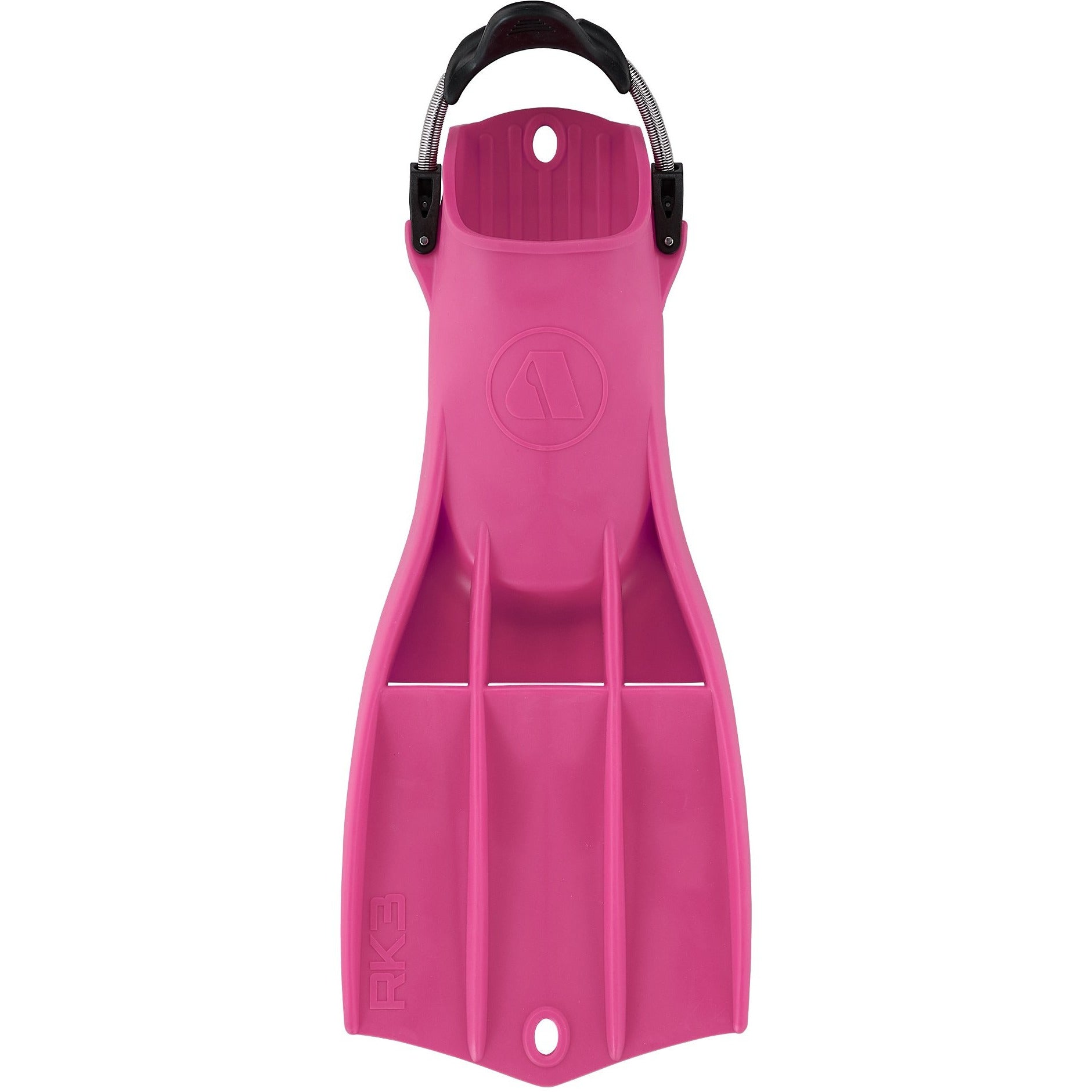
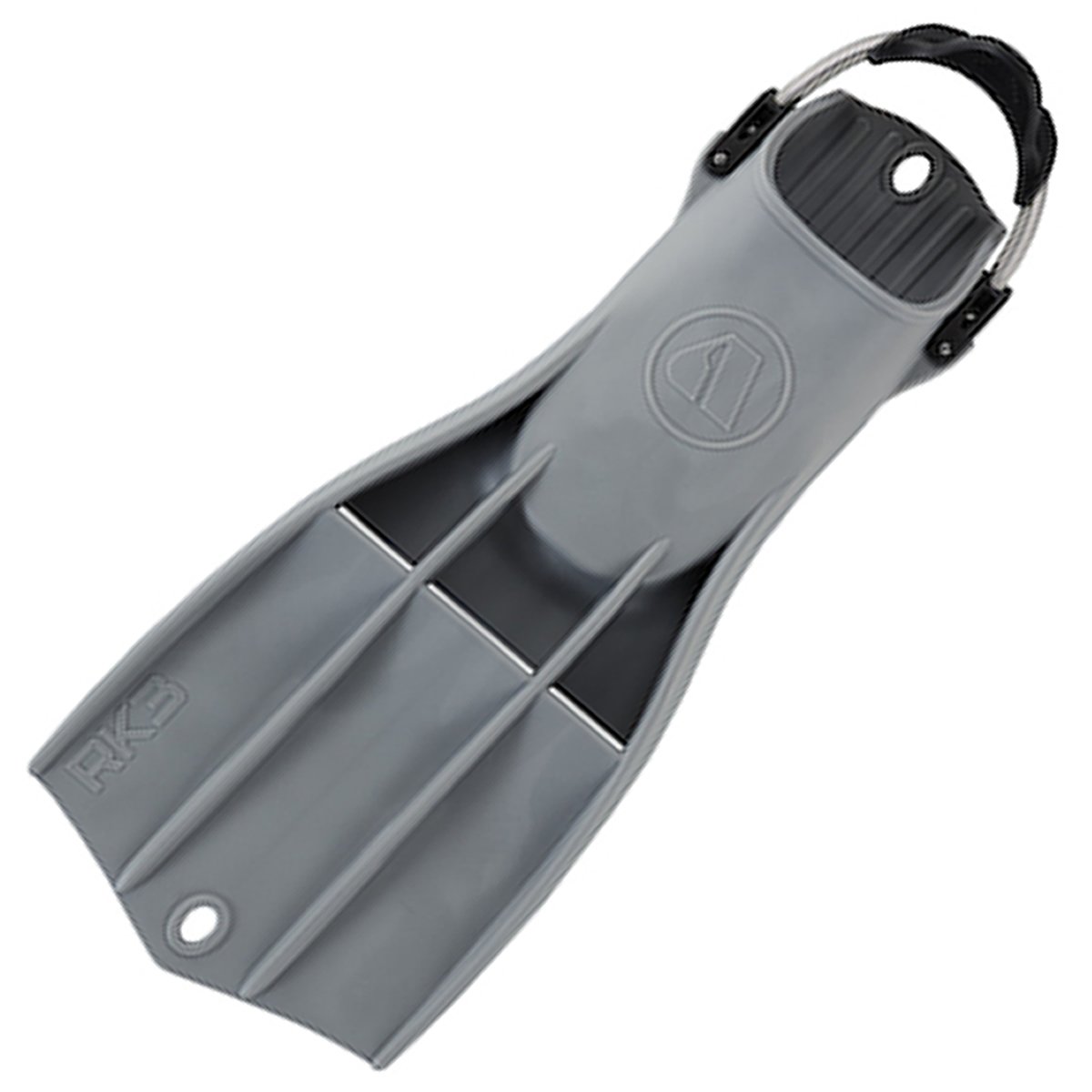
The RK3 is the fin you see on more UK technical divers than anything else, and it has earned that position rather than marketed its way into it. Short, broad, vented rubber blade, oversized foot pocket, spring straps. Nothing clever, everything durable.
The oversized foot pocket is the detail that matters here. It is cut to swallow a drysuit boot, which is exactly where most fins fail UK divers. If you have ever tried to force a drysuit boot into a fin designed around a wetsuit bootie, you already know why this exists.
They come in three sizes, and Apeks deliberately does not assign shoe sizes to them, which trips people up more than any other fin in our scuba fins range.
The RK3 sinks. For drysuit divers that is useful, because it counteracts the air in your boots and stops your feet floating up. If you dive wet in warm water, that same weight can feel like too much, and a lighter plastic fin may suit you better.
The foot pocket is genuinely oversized. Combined with spring straps that stretch rather than buckle, getting fins on over bulky boots stops being the most annoying part of kitting up.
Long blades are efficient in open water and a liability in a wreck. The short, broad RK3 blade lets you back-fin, helicopter turn and hold position without catching the silt or the structure behind you.
Moulded rubber, no hinges, no plastic buckles to snap in the cold. This is why they turn up on military, coast guard and public safety divers, who cannot afford kit failures and do not get to choose the conditions.
The vents let water through on the upstroke, where you are not producing thrust anyway, and close up on the downstroke where you are. The result is less effort per kick over a long dive.
No buckles to adjust, nothing to snap, and they stay at the tension you set. Spring straps are the single best upgrade on any fin and the RK3 ships with them rather than charging extra.
Stiff enough to push water properly, tough enough to survive being dragged over a shingle beach. Rubber also does not go brittle in cold water the way some plastics can.
Short blades pack into a dive bag far more easily than long ones. They are heavy, which is the trade, but they take up very little room.
The RK3 descends from one of the first vented rubber fins sold in North America. The shape has been in service for decades because it works, not because it is fashionable.
Rubber is heavy. A pair of RK3s will use a meaningful part of a flight baggage allowance. If you fly to dive and dive wet, look at a lighter plastic fin and keep these for home.
Apeks does not print shoe sizes on the RK3 because the fin is sized around your boot, not your foot. A size nine diver in a thin wetsuit bootie and a size nine diver in a bulky drysuit boot need different foot pockets, and a shoe-size chart would mislead both.
Medium, Large and Super is the whole range. As a rough guide, Medium suits wetsuit booties and smaller feet, Large covers most drysuit boots, and Super is for larger drysuit boots and heavy technical boots. Bring your boots and try them, because guessing this from a chart is how people end up with fins they cannot get on.
Who it may not be for: travelling divers watching baggage weight, and warm-water divers in thin booties who may find rubber fins heavier on the legs than they need. If you want more stiffness and power from the same design, look at the RK3 HD instead.
| Product | Apeks RK3 fins |
|---|---|
| Material | Thermoplastic rubber |
| Blade | Short and broad, vented |
| Foot pocket | Oversized, sized for drysuit boots |
| Straps | Spring straps, fitted as standard |
| Sizes | Medium, Large, Super. No shoe-size equivalents |
| Buoyancy | Negative |
| Options | Colour and size |
It depends on your boots, not your shoe size, which is why Apeks does not publish shoe-size equivalents. As a guide, Medium for wetsuit booties, Large for most drysuit boots, Super for larger or heavy technical boots. Try them with your own boots.
Yes, that is what the oversized foot pocket is for. It is one of the main reasons UK drysuit divers choose them.
The HD uses a stiffer polymer for more power per kick. The standard RK3 is softer and easier on the legs. Choose the HD if you dive in current or carry heavy kit, the standard if you want less effort over long dives.
Yes. They sink, which helps counteract the air in drysuit boots and keeps your feet down. In a thin wetsuit that same weight can feel excessive.
They pack small but they are heavy. For flight baggage allowances, a lighter plastic fin is usually the better travel choice.
Yes, spring straps are fitted as standard rather than sold as an upgrade.
Comparing fins? See the full Apeks range for the RK3, the RK3 HD and the rest of the line.
Your cart is empty