Action Cameras

Two brands cover underwater action video at Oyster Diving: GoPro and Insta360. You will find fixed-lens HERO cameras for straightforward point-and-shoot footage, 360° models from both brands, and dive-ready bundles that ship with the case, stick and card already in the box. We dive with these cameras ourselves, and can tell you which one suits the diving you actually do.

  • Expert diving advice
  • UK delivery
  • Multi-award-winning PADI dive centre
  • Secure checkout
6 products
Read the full buying guide

Fixed lens or 360°?

This is the decision that actually matters, and it comes before the choice of brand. A fixed-lens camera records what you point it at, which means framing the shot while you are also managing buoyancy, trim and a group. A 360° camera records everything around it and leaves the framing until you are dry and sat at a laptop. Neither is better. They ask for effort at different moments.

The GoPro HERO line

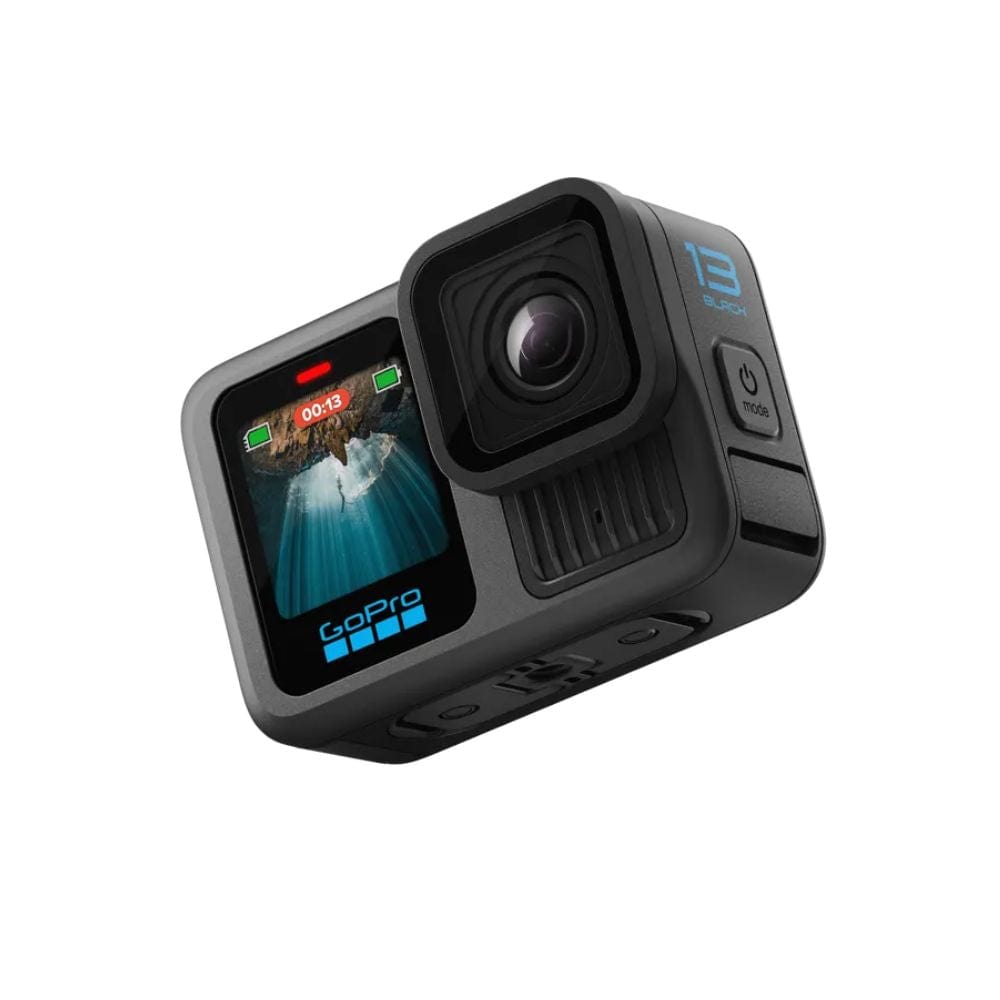
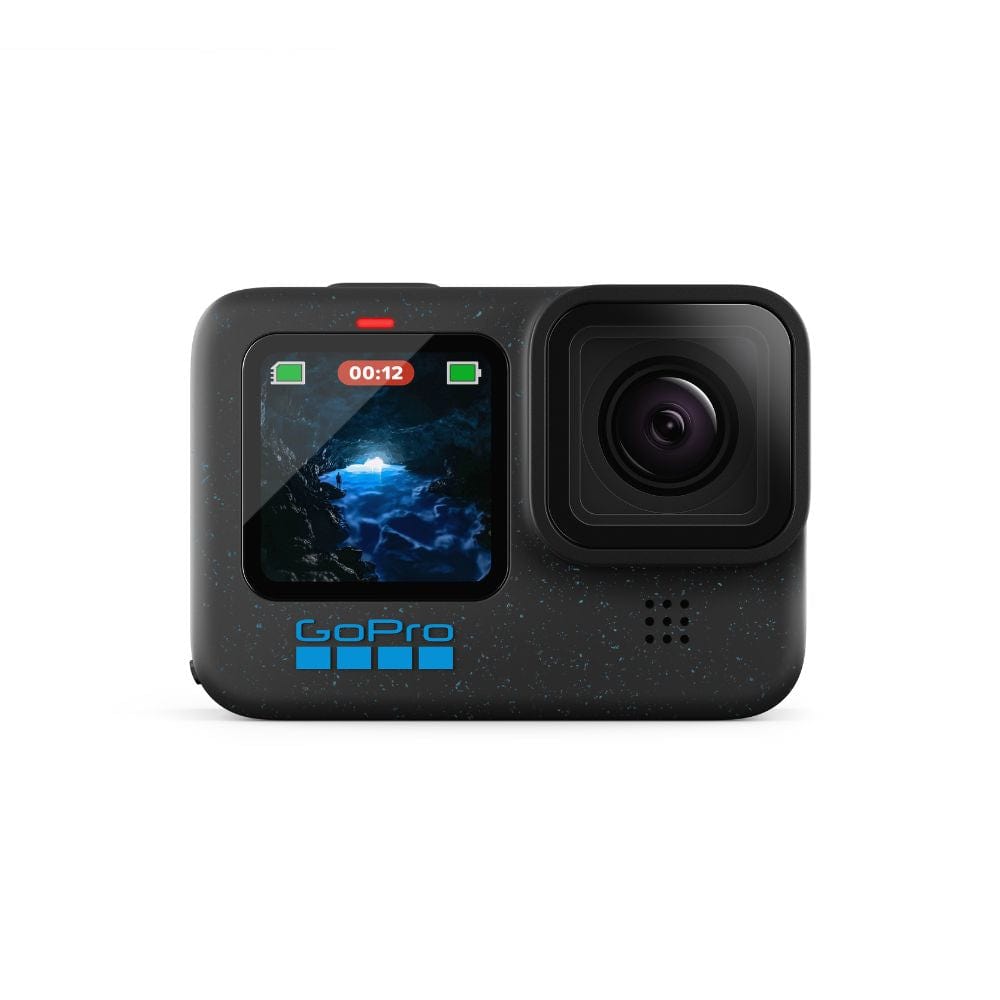
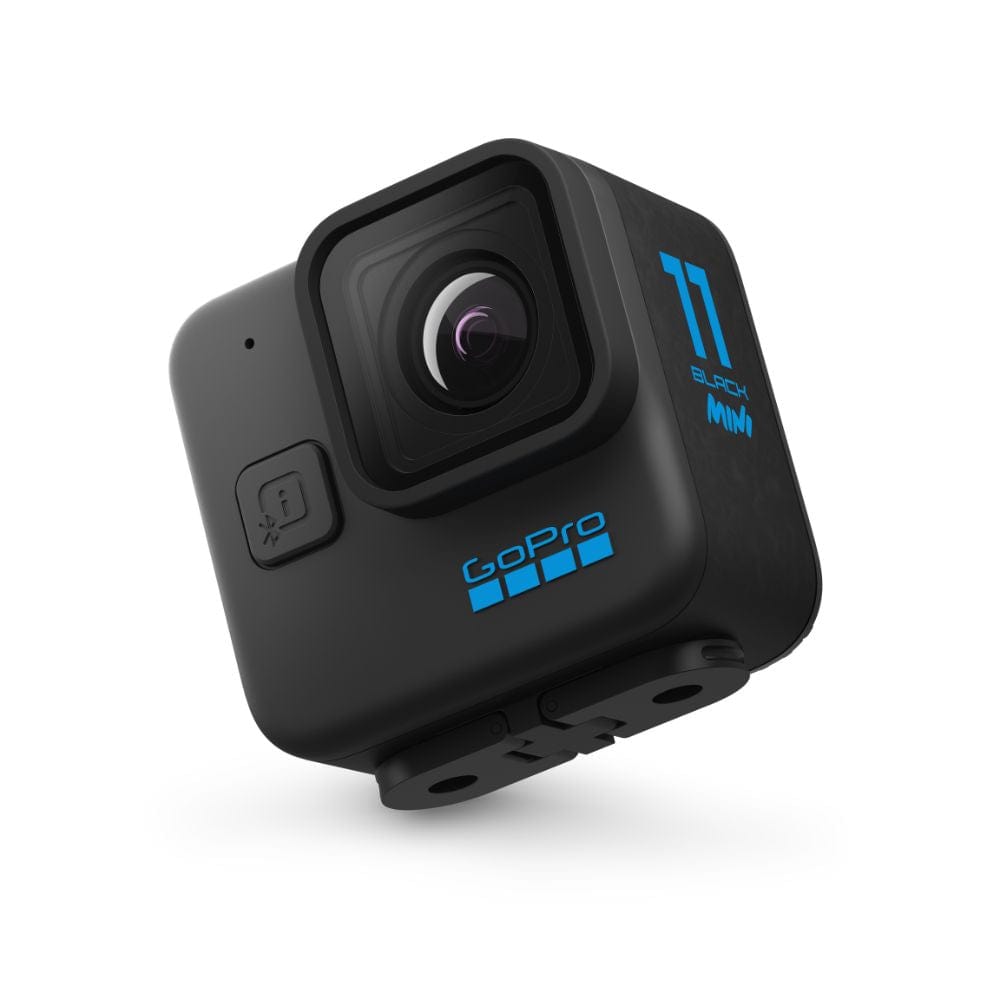
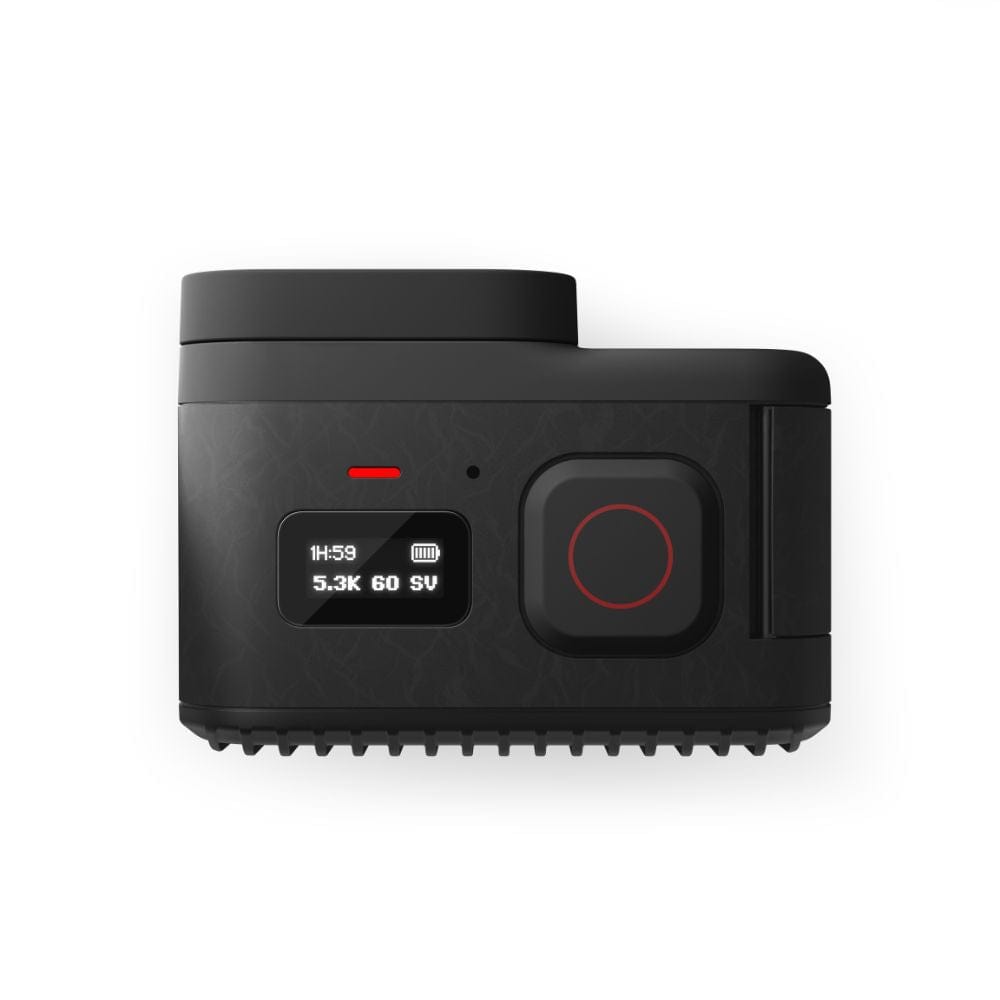
The HERO cameras are the straightforward option, and they are what most divers end up with. The HERO13 Black is the current flagship and takes the widest set of lens mods and mounts. The HERO12 Black covers much of the same ground a generation back. The HERO11 Black mini strips out the screen for a smaller body that is easier to mount on a mask. The plain HERO is the smallest and simplest of the lot, built for people who want to press one button and get 4K back. All of them run HyperSmooth stabilisation, which is what stops footage looking like a washing machine when you are finning into current.

360° cameras

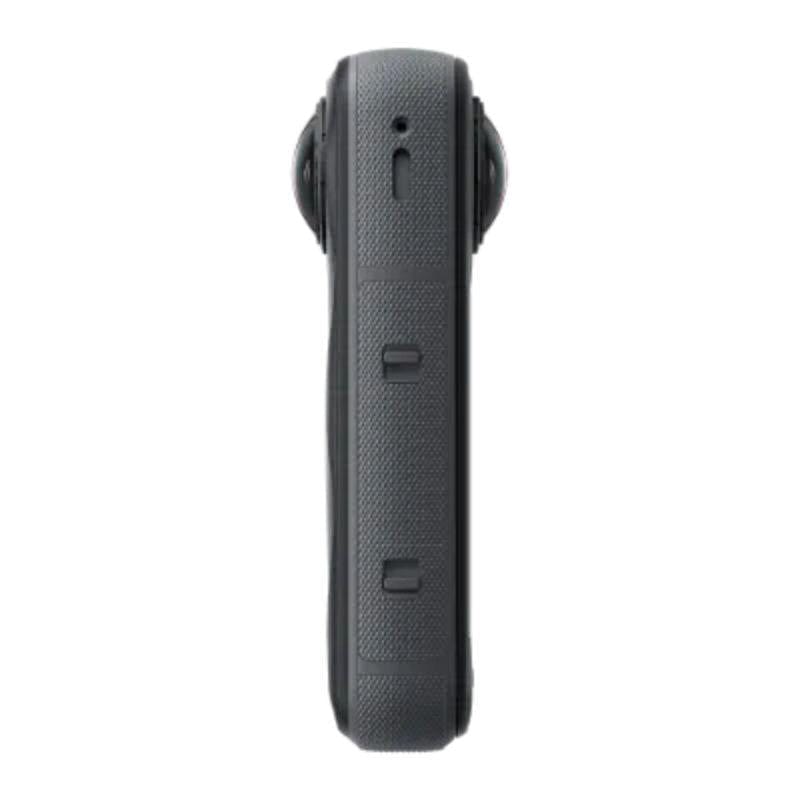
The Insta360 X4 and X5 both shoot 8K in full 360°, and the GoPro MAX offers a 360 mode alongside a conventional HERO mode if you want one body that does both. The real advantage underwater is not resolution, it is that you stop missing things. The shark that comes over your shoulder is already in the file. You reframe later and pull a flat video out of the sphere. The trade is editing time, and a lot of storage.

The Insta360 Ace Pro

The Ace Pro sits between the two camps: a conventional single-lens camera, but with a larger sensor than most action cameras carry and a flip screen that makes it far easier to see what you are framing. If you shoot as much above the water as below it, it is the most versatile body here.

Bare camera or dive bundle?

Most of the cameras here are sold two ways, and it is worth understanding the difference before you add to basket. A bare camera is the body and its standard accessories. A dive bundle is that same camera packaged with the parts you would otherwise have to buy separately and match up yourself.

The Insta360 X4 Divers Bundle pairs the X4 with the Invisible Dive Case, a selfie stick and a memory card. The X5 Invisible Dive Bundle goes further, adding the dive case, an invisible selfie stick, a floating hand grip and a card. The Ace Pro Splash Kit brings a dive case, a bright orange float guard that keeps the camera from sinking if you fumble a handover, and a card. If you already own cases and mounts that fit, buy the bare body. If you are starting from nothing, the bundles save you a round of compatibility research.

Getting footage worth keeping

Light does more than resolution

Water absorbs the red end of the spectrum before anything else, which is why footage from depth comes back blue and flat no matter how many pixels the sensor has. A video light puts that colour back. It is the single biggest upgrade available to anyone already holding a decent camera, and it costs less attention than switching bodies. We stock lights and trays separately under Camera Accessories.

Hold it steady

Stabilisation software is good now, but it works with what you give it. A mask mount frees both hands and gives a natural point of view, though it also records every time you look at your gauge. A tray with handles is steadier, gives you somewhere to bolt a light, and makes it obvious to your buddy where the camera is pointing. For 360° work an invisible selfie stick disappears from the finished sphere and produces the floating, third-person shot that makes the format worth the editing.

Which one should you buy?

If you want a straightforward record of your dives with minimal fuss, take a HERO and a mount and be done. If you dive wrecks, walls and swim-throughs where no single angle covers the scene, the X4 or X5 will get you shots a fixed lens cannot. If you want one camera for diving, travel and everything above the surface, look at the Ace Pro or the GoPro MAX.

Whichever you pick, sort the dive case and a memory card at the same time. Nothing is more annoying than a new camera you cannot take in the water. If you are undecided, tell us what you dive and where, and we will give you a straight answer rather than a spec sheet.

Frequently asked questions

Which action camera brands does Oyster Diving stock?

Two: GoPro and Insta360. The GoPro range covers the fixed-lens HERO line - HERO13 Black, HERO12 Black, HERO11 Black mini and the compact HERO - plus the GoPro MAX for 360 degree work. From Insta360 we stock the X4 on its own or as the X4 Divers Bundle, the X5 as the Invisible Dive Bundle, and the Ace Pro bare or as the Ace Pro Splash Kit. Those are the two brands we dive with ourselves, so those are the two we sell and support.

Do I need a dive case, or is the camera already waterproof?

Both things are true. These cameras are sealed against water out of the box, but that sealing is meant for rain, splash and shallow immersion rather than a scuba descent. For diving you want the dedicated dive case, which is rated considerably deeper and, on the Insta360 models, uses a glass lens port that keeps the image clean underwater. The Insta360 X5 Invisible Dive Bundle and the Ace Pro Splash Kit both include one, and the X4 Divers Bundle ships with the Invisible Dive Case. If you are buying a camera on its own, check the depth rating stated on that product page before you take it down.

Should I buy the camera on its own or as a dive bundle?

If you already own a dive case, mounts and cards that fit, buy the bare camera. If you are starting from nothing, a bundle is simpler and tidier. The Insta360 X4 Divers Bundle adds the Invisible Dive Case, a selfie stick and a memory card. The X5 Invisible Dive Bundle adds the Invisible Dive Case, an invisible selfie stick, a floating hand grip and a card. The Ace Pro Splash Kit adds a dive case, an orange float guard that stops the camera sinking, and a card. Worth knowing before you choose: the standard Insta360 X4 does not include a memory card.

What is the difference between the Insta360 X4 and the X5?

Both shoot 8K 360 degree video, and both let you reframe after the dive instead of aiming during it. The X5 is the newer body: larger dual sensors, a triple AI chipset, a PureVideo low-light mode, replaceable lenses you can swap yourself if you scratch a port, a built-in wind guard and a longer-running battery. The X4 is still a capable 360 camera and the more affordable way in. If you dive UK water where visibility and light are often poor, the low-light handling is the main reason to step up to the X5.

What else do I need to get usable footage?

A memory card, a spare battery, and a way to hold the camera steady. Once you are underwater the red end of the spectrum drops away, so a video light is the single biggest improvement you can make to how your footage looks - we stock lights and trays separately under Camera Accessories. A mask mount or a hand grip both work, but a tray with a handle is steadier and gives you somewhere to mount that light. If you are shooting 360, an invisible selfie stick vanishes from the footage and gives you the floating third-person shot.