Video Lights

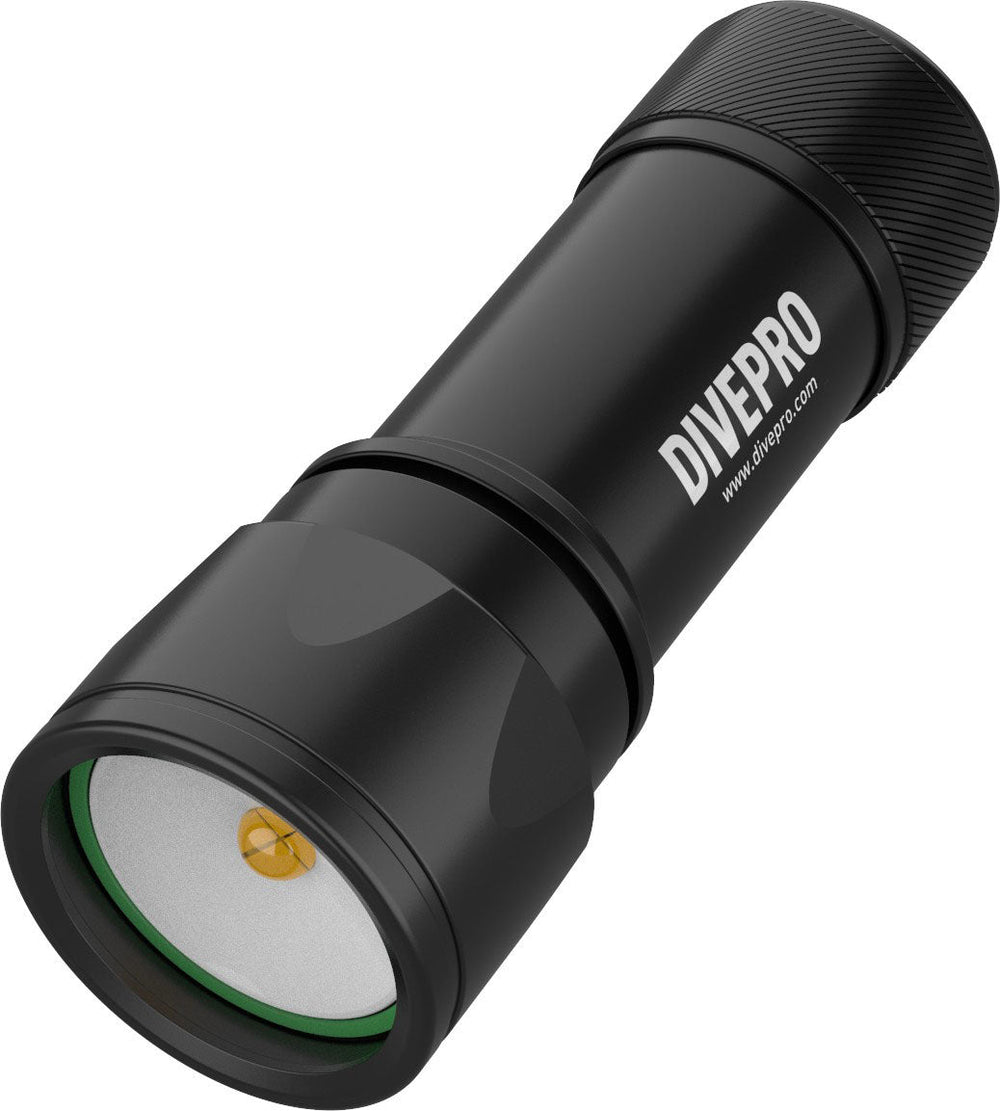
Below about five metres, red drains out of everything you shoot and footage turns blue-grey. A video light puts the colour back. We stock continuous video and focus lights from Divepro and Ammonite, from a pocketable 1,050-lumen compact through to an 18,000-lumen wide beam built for filming. Output is only half the question though — beam angle and colour rendering decide what your footage actually looks like. Tell us what you shoot and we will match the light to it.

Diver holding an underwater camera
  • Expert diving advice
  • UK delivery
  • Multi-award-winning PADI dive centre
  • Secure checkout
2 products
Read the full buying guide

How much output do you actually need?

Lumens are the headline number on every product page, but they are not the whole story. What you are filming, and how wide, matters just as much. As a rough ladder:

1,000 to 4,000 lumens: macro, close-up and focus work

Enough for subjects within arm's reach, and enough to act as a focus light on a stills rig. The Divepro D6F runs 1,050 lumens with a 240-minute burn time; the D40F steps up to 4,000. The MP30 is the specialist here, a macro snoot light that concentrates 210,000 lux into a tight circle for isolating small subjects against a black background.

8,000 to 12,000 lumens: general wide-angle video

The working range for most UK filming. The Divepro D80F puts out 8,000 lumens and adds red and UV emitters alongside the white, with a colour temperature range of 3000K to 6500K. The G12 Plus runs 12,000 lumens at CRI 92.

15,000 to 18,000 lumens: wide scenes and filming at range

For wreck exteriors, large subjects and anything where you need to light beyond a few metres. The G15 and G18 series cover this, both at CRI 92 and 5000K.

Beam angle matters more than lumens

A wide, even beam is what you want for video. Hot spots in the centre of the frame are one of the few problems you genuinely cannot fix in the grade, and a bright light with a narrow beam will produce them every time.

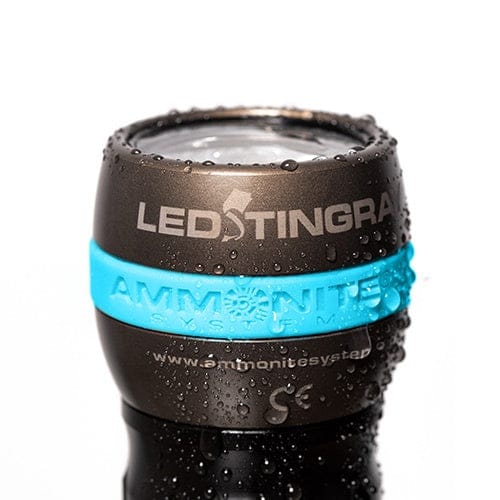
Narrow beams do a different job. The Ammonite LED Stingray MKII throws a focused 6-degree spot with a soft halo and up to 120 minutes at full power. That makes it a focus and spotting light, for finding subjects, for lighting your camera's autofocus, and for cutting through poor visibility, rather than a fill light for filming.

CRI, and why it decides your colour

CRI, the Colour Rendering Index, describes how faithfully a light reproduces colour compared with daylight. It is the specification most people ignore and then regret.

The Divepro G-series runs CRI 92 at 5000K. The G15 Pro Plus goes further, to CRI 98. If you shoot stills, or video you intend to colour grade, the higher-CRI lights earn their keep: colour that goes in accurately needs far less rescuing afterwards. If you are filming for social media and dive logs, CRI 92 is already very good.

One light or two?

One light will illuminate a subject. Two will shape it. A single light mounted above the housing casts a hard shadow downward and lights backscatter directly in front of the lens; a pair on arms, angled outward and slightly forward, lights the subject from both sides and pushes the backscatter out of frame.

If the budget only stretches to one, buy one good light now and add the second later. Matched pairs matter more than having two cheap lights of different colour temperatures.

Not sure? Ask before you buy

Our team dive in the same UK water you do, and we can advise on output, beam angle and what fits your specific housing and arm setup. Getting the light wrong is an expensive mistake, and it is much easier to avoid in advance than to correct afterwards. Call us on 0800 699 0243 or come and see us in Hove.

Frequently asked questions

Do I need a video light for diving in the UK?

If you want colour in your footage, yes. Water absorbs red first, then orange, and in UK green water that happens fast. By five metres most of the red has gone and everything trends blue-grey. A red filter helps in shallow, bright conditions, but below about ten metres there is not enough red light left for a filter to restore. Only an artificial light source puts the colour back.

How many lumens do I need for underwater video?

For close-up and macro work, 1,000 to 4,000 lumens is plenty. For general wide-angle filming, 8,000 to 12,000 is the usual working range. Above that, 15,000 to 18,000 suits wide scenes, wrecks and lighting subjects at a distance. Beam angle matters as much as output: a wide, even beam at 8,000 lumens will give you better footage than a narrow, hot-spotted beam at 15,000.

What is CRI and does it matter?

CRI, or Colour Rendering Index, measures how accurately a light reproduces colour against daylight. Higher is better. The Divepro G-series runs CRI 92, and the G15 Pro Plus reaches CRI 98. If you shoot stills or grade your video afterwards, high CRI saves a great deal of work in post. For casual filming, CRI 92 is already more than adequate.

Can I use a dive torch as a video light?

It is not ideal. Dive torches are built to throw a narrow, bright beam a long way so that you can see, which is the opposite of what video wants. On camera that produces a bright hot spot in the middle of the frame with dark edges. Video lights use a wide, even beam and a controlled colour temperature. A torch will do at a push for macro, but it will show.

Do I need one video light or two?

One lights the subject; two shape it and control backscatter. A single light above the housing throws a hard shadow and lights particles straight in front of the lens. A pair mounted on arms, angled outward, lights from both sides and keeps most of the backscatter out of frame. If you are starting with one, buy a good one and add a matching second later. Mismatched colour temperatures are more trouble than a missing second light.